


Laminitis in horses is a painful hoof condition often triggered by insulin dysregulation (ID), rich spring grass, Equine Metabolic Syndrome (EMS), or PPID. In 2026, management of laminitis has greatly evolved and focuses on rapid veterinary assessment, strict diet control, careful grazing restriction, hoof support, and modern options such as EQU StreamZ bio-resonance technology.
It is that time of year again, the birds are singing, the days are stretching out, and the countryside is turning a vibrant, lush shade of green. But for horse owners, that beautiful "spring flush" isn’t just a scenic backdrop; it’s a high-stakes dietary minefield. We are officially in the danger zone where a single afternoon of grazing on the wrong patch of grass can trigger the dreaded "L-word."

Laminitis remains one of the most heart-breaking and complex conditions we face in the equestrian world. It is the silent thief of soundness, turning a happy hacker or a podium-ready athlete into a horse that is visibly in pain and struggling to stand. However, as we move through 2026, the landscape of laminitis management is shifting. We aren't just reacting to the "hot hoof" anymore; we are using genetic markers, advanced pharmacology, and revolutionary wearable tech to stay three steps ahead of the inflammation.
At StreamZ Global, we believe that understanding the "why" is just as important as the "how." While our core mission is providing non-thermal support through magnetic bio-resonance technology, we know that a holistic approach, combining the latest veterinary breakthroughs with traditional management, is the only way to navigate the spring flush successfully. Whether you are managing a chronic case or hyper-vigilant about prevention, this is your 2026 guide to keeping those hooves healthy and those insulin spikes at bay.
✔ Repair when something goes wrong.
✔ Prevent problems before they occur.
✔ Perfect their daily routines.
The Spring Flush: Why April and May Are the Danger Zone
We’ve all heard the term "fructans," but in 2026, our understanding of grass chemistry has become even more sophisticated. The spring flush is essentially a perfect storm of environmental factors. When we have bright, sunny days followed by chilly nights, the grass photosynthesises like crazy during the day but can’t use that energy for growth during the cold night. Instead, it stores it as high-octane sugars (fructans).
When your horse ingests this sugary cocktail, it’s like a human eating twenty glazed doughnuts in one sitting. For horses with metabolic issues or those prone to Pituitary Pars Intermedia Dysfunction (PPID), this causes a massive insulin spike.
Recent research has shown that it isn't just "inflammation" in a general sense; scientists have identified that keratin degradation is what actually initiates the "flat tire" effect in the hoof. The internal structures (the laminae) literally start to lose their grip, which is why early intervention is so critical. If you want to dive deeper into the fundamental signs, our pillar guide on laminitis signs and treatment is the essential starting point.

2026 Breakthroughs: The New Frontier of Laminitis Treatment
If you haven’t checked in with your vet lately, you might be surprised by the tools to support laminitis now available in 2026. We are no longer limited to just "box rest and Bute." The introduction of bio-resonance therapy for horses and medications to treat laminitis are now more advanced than ever.
SGLT2 Inhibitors (The Insulin Game-Changer)
Perhaps the biggest breakthrough in recent years is the widespread use of SGLT2 inhibitors, specifically drugs like Ertuglifl*zin. Originally developed for human Type 2 diabetes, these medications have been adapted for equines to help the kidneys flush excess glucose out through the urine. This prevents the massive insulin spikes that lead to laminitic episodes in horses with Equine Metabolic Syndrome (EMS). It’s a literal lifesaver for horses that previously couldn't even look at a blade of grass without tipping over the edge.
What has made this class of drugs such a talking point is its performance in the real world, particularly in the frustrating, "hard-to-treat" cases that do not respond well to Metf*rmin or even very strict dietary control. Published case reporting has shown an improved quality of life in over 85% of cases, which is a remarkable figure in horses where management options can otherwise feel very limited.
A few practical points matter here:
- Most common drug used: Ertuglifl*zin is currently the best-known and most commonly used SGLT2 option, featuring in nearly 80% of reported cases.
- Administration: It is typically given orally, once daily, with reported doses often sitting in the 5–15 mg range depending on bodyweight and veterinary direction.
- Best-fit cases: These drugs are generally discussed for horses and ponies with severe insulin dysregulation, especially when standard management has not been enough to keep laminitis under control.
That said, this is absolutely not a casual add-on or a "try it and see" supplement. SGLT2 inhibitors need close veterinary supervision because the side-effect profile is real. Reported risks include:
- Hypertriglyceridemia — abnormally high fat levels in the blood
- Lethargy
- Dehydration, which can increase the risk of colic
- The need for ongoing liver enzyme monitoring, which is considered essential while the horse is on treatment
For UK owners, there is also the practical sting in the tail: cost and availability. These medicines are generally prescribed off-label under the veterinary cascade, and they are famously expensive.
Monthly costs commonly exceed £100, with reports ranging from roughly £56 up to £195 per month depending on dose and sourcing. On top of that, you need to budget for follow-up blood tests, repeat consultations, and ongoing monitoring, because this is not a low-maintenance treatment route.

In short, SGLT2 inhibitors have become a genuine modern option for selected laminitis cases, but they sit firmly in the category of specialist veterinary management, not DIY care.

Botox for Acute Cases
Yes, you read that right. Botox isn’t just for smoothing out forehead wrinkles anymore. In acute laminitis cases, veterinarians are now using Botox injections into the Deep Digital Flexor Tendon (DDFT) to temporarily "quiet" the muscle. By reducing the mechanical pull of the DDFT on the pedal bone, we can significantly decrease the risk of rotation while the laminae are weakened. It’s a revolutionary way to buy the horse time to heal.
Methylated Tirilaz*d
New anti-inflammatories like methylated tirilaz*d (PTP-102) are also hitting the market. Developed in Ireland, this new therapeutic agent has been highlighted as a potentially more cost-effective way to target lamellar damage than SGLT2 inhibitors and improve lameness scores in horses dealing with laminitis.
Unlike traditional NSAIDs, it is being studied for its ability to interrupt the oxidative stress and inflammatory "keratin cascade" identified in recent laminitis research, helping to preserve the laminar tissue structure more effectively than older-generation drugs.
It also gained serious attention in significant November 2024 reports, where it was presented as a major step forward in mitigating the inflammatory cascade associated with laminitis. That matters because one of the biggest challenges in this condition is not just managing pain, but limiting the deeper tissue damage that drives long-term hoof instability.
For now, owners should view PTP-102 as a promising emerging treatment, not a standard yard-kit option. In practical terms:
- Availability: It is currently a new therapeutic agent and is likely only available through specialist equine veterinary channels or clinical trial settings.
- Pricing: There is no standard UK retail price yet, because it remains in the "promising study" phase rather than being a widely available commercial product.
- What to expect: If your vet discusses it at all, it will usually be in the context of specialist case management, emerging evidence, and careful risk-benefit review rather than routine first-line treatment.
As always, this is one to discuss directly with your vet rather than chase online. The science is exciting, but access is still limited and the commercial picture has not fully caught up with the research.
The Recovery Roadmap: Why EQU StreamZ is the 24/7 Essential
When a horse is in a laminitic crisis or the long recovery phase, the hoof is often a "hot" environment. This is why traditional magnetic therapy for horses: which often relies on thermal-based magnets that generate heat: can be a risky choice. Heat can exacerbate the inflammatory process, which is the last thing you want when the laminae are already under fire.
This is where EQU StreamZ magnetic bands for horses offer a unique, "no-heat" advantage. Our 360º magnetic bio-resonance technology does not generate a thermal reaction. This means the bands can be worn safely 24 hours a day, 7 days a week, even during the acute phase and throughout the long months of stable rest and rehabilitation.
Because the EQU StreamZ bands are designed as a wrap-around band rather than a heavy boot, they don’t cause the leg to sweat or overheat. They provide consistent support to the horse's overall well-being without interfering with other treatments like icing or medical wraps. Whether your horse is recovering from a tendon injury alongside laminitis or just needs that baseline support during turnout, the non-invasive nature of bio-resonance is a perfect fit for 2026's "standard of care."

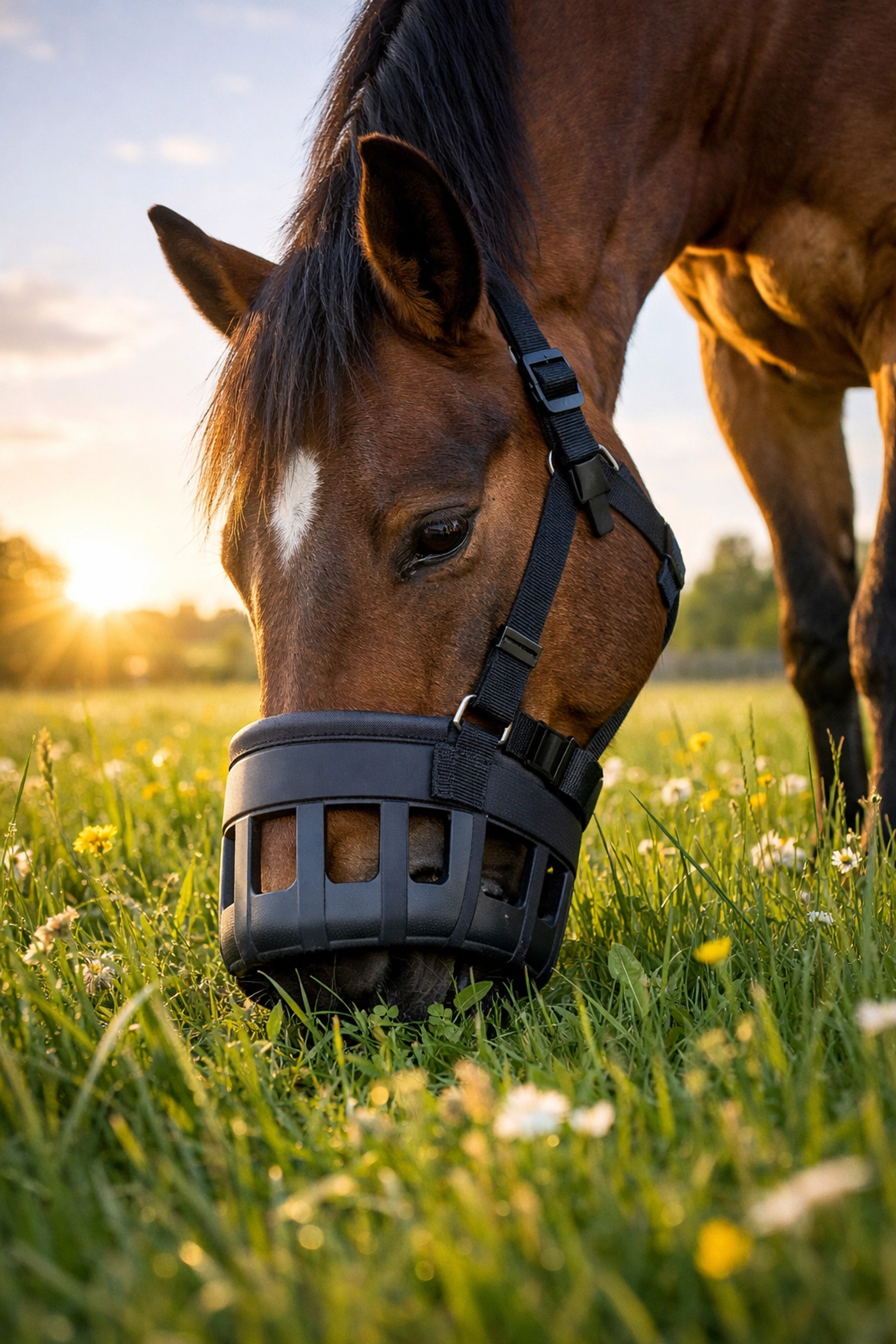
Top Rated Grazing Muzzles for 2026
If your horse is "laminitis-prone" but you still want them to enjoy some social time in the field, a muzzle is your best friend. In 2026, muzzles have come a long way from the "bucket-on-a-halter" designs that caused rubs and frustration.
Here are our top two picks for this season:
-
ThinLine Flexible Filly (The Comfort King): This is the gold standard for breathability. It’s made of a flexible, lightweight polymer that doesn't hold heat and is incredibly soft on the horse's skin. It’s our top pick for horses that are sensitive to rubbing. Buy from our retailer Urban Horse today.
- GreenGuard (The Durability Champ): If you have a "Houdini" who can get out of anything, the GreenGuard is the way to go. Its unique grid design allows for plenty of airflow and lets the horse drink easily, but it is virtually indestructible. Buy from our retailer Redpost Equestrian today.
The 2026 Spring Defence Checklist
Before you open that gate to the spring grass, run through this quick checklist to ensure your horse's "hoof-health" is secured:
- Test Your Hay: Even soaked hay can be high in sugar. Use a 2026-standard lab test to check your NSC (Non-Structural Carbohydrate) levels.
- Monitor Adip*nectin: Ask your vet for a blood test to check adip*nectin levels. Lower levels are a major "red flag" for an impending laminitis episode.
- Strip Grazing & Track Systems: Move your horse to a "paddock paradise" or track system to encourage movement without over-consumption.
- Check Digital Pulses Daily: Get to know your horse's "normal." A bounding pulse is your early warning system.
- Deploy Your EQU StreamZ Bands: Ensure your bands are fitted correctly and worn 24/7 to support the horse through the seasonal transition.
- Night Grazing Only: Fructan levels are usually at their lowest between 3:00 AM and 10:00 AM.

👉 Articles of interest:
If your horse is recovering from injury, read our complete guide to Rehabilitation & Recovery for Equine Injuries (Repair).Prevention is as important as cure. With this in mind, read our guide to How to Prevent Injuries in Horses (Prevent).
To go beyond prevention and optimise long-term soundness, explore Optimising Performance in Horses (Perfect).
A Final Thought on Management
Laminitis is a journey, not a sprint. While the breakthroughs of 2026: from SGLT2 inhibitors to non-thermal magnetic therapy: have given us more tools than ever before, the most important tool remains you. Your observation, your dedication to weight management, and your willingness to adapt are what truly make the difference.
Always consult with your veterinarian and farrier before changing your horse's treatment plan. Laminitis is a medical emergency, and while support tools like EQU StreamZ and grazing muzzles are vital parts of the puzzle, they work best when integrated into a professional care plan.
FAQ's on Laminitis
What is laminitis in horses?
Laminitis is a painful condition affecting the sensitive laminae inside the hoof. When these structures become damaged or weakened, the hoof’s internal support system is compromised, which can lead to severe pain, instability, and in serious cases, rotation of the pedal bone. It is always a veterinary emergency.
What causes laminitis most often in spring?
Spring grass is often high in sugars, especially after sunny days and cold nights. In horses with insulin dysregulation, EMS, or PPID, that sugar surge can trigger the metabolic chain of events linked with laminitis.
What are the early warning signs of laminitis?
Common early signs include a stronger-than-normal digital pulse, heat in the feet, stiffness when turning, reluctance to walk, a pottery gait, shifting weight between feet, and standing with the front feet stretched out. If you notice these signs, contact your vet immediately.
How long does laminitis recovery usually take?
Recovery time varies widely depending on severity, how quickly treatment starts, and whether the underlying cause is controlled. Mild cases may improve over weeks, while more serious cases can require many months of veterinary and farriery management.
Can horses with laminitis still go out on grass?
Some can, but only under strict veterinary guidance. Turnout decisions usually depend on the horse’s metabolic status, pain level, season, pasture conditions, and whether controls such as restricted turnout, track systems, or a well-fitted grazing muzzle are in place.
How does EQU StreamZ support horses with laminitis?
EQU StreamZ supports horses with laminitis as part of a wider care plan by offering 360º magnetic bio-resonance technology designed for ongoing joint care. Because the bands do not generate heat, they can be used comfortably alongside a vet-led management routine.
Can EQU StreamZ be worn 24/7 for laminitis support?
Yes, EQU StreamZ Bands are designed for 24/7 wear, including during stable rest and turnout, which makes them practical for horses needing consistent support over long recovery periods. They are not a cooling product; they are designed for comfortable, ongoing wear.
Why is no-heat technology important when using EQU StreamZ for laminitis?
In laminitis management, owners are often cautious about anything that may add unnecessary heat around already stressed tissues. EQU StreamZ uses no-heat technology, so the bands can remain part of the horse’s routine without creating a thermal reaction.
Can EQU StreamZ be used alongside other laminitis management strategies?
Yes, EQU StreamZ is best viewed as a supportive addition to professional care, not a replacement for veterinary treatment. Owners often use it alongside diet control, farriery, restricted grazing, stable management, and other vet-directed interventions because the bands are lightweight, wearable, and suitable for ongoing joint care support.
Are EQU StreamZ Bands the same as Coolboots for horses with laminitis?
No. EQU StreamZ Bands are designed for 24/7 wear and ongoing support using magnetic bio-resonance technology without heat generation. Coolboots are a separate magnetic product intended for immediate post-exercise cooling for 5–20 minutes, using Nano-Cooling material with no ice or freezer needed.